When you observe Rococo wigs, you suppose that the headdress fashion reached it`s limits. When we skip one century and get to the 19th century, we notice an era named – “Biedermeier“.
Between the years 1820 and 1830 hair was divided into three parts on the top of the head. Hair on the both sides was dressed in curls and loops. From the crown of the head hair was bounded into knots.
Braids were also modern throughout this era, and were looped over a topknot.
For evening events, hair was decorated with flowers, combs, ribbons, hair pins or with a piece of jewellery.
I have to admit that I am impressed how skilled they were. I really do no know whether I would ever wear any of these hairstyle. However I have one which is my favorite:
Georgiana was born 7 June 1757 into the Spencer family and died 30 March 1806 as spouse of William Cavendish. She grew up in Althorp with her two younger siblings Henrietta and George.
Georgiana was born into noble family and by her marriage with the Duke of Devonshire got higher social status. She was very famous for her beauty, fashion style, political influence, love affair Charles Grey and friendship with Elizabeth Foster, which turned into unusual marriage agreement.
We love historical dress, so let`s talk about the fashion style. Georgiana was a fashion icon of the Rococo era and was copied by the women. She wore large hats and mass curly hair. The high headdress was decorated with three-foot ostrich feather which she imported to Britain from Paris. For better imagination, here is the reconstructed headdress in the movie “The Duchess“:
In 1783 she presented the free-flowing muslin dress that was simply tied by a ribbon around the waist.
It is very good opportunity to continue showing the costumes from the movie about Georgiana – The Duchess staring Keira Knightley.
The costumes were designed by Michael O’Connor, who also cooperated on films Jane Eyre and Tulip Fever.
The costumes for Georgiana character nicely capture the second half of the 18th century fashion, such as Robe à la Française, Robe à l’Anglaise, Robe à la Polonaise, women`s redingote and parts of the dress – a pannier, a fichu, a stomacher, ribbons, bows and stripes.
As has been already mentioned, Georgiana was political activist. And how better would you express your support for Charles James Fox from Wig party? The solution is to wear a fox fur muff 🙂 (up right picture).
The costumes made a good impression on me. And what impression do you have?
I found Morgan on YouTube, where she has her own channel. She shows her own historical projects. Morgan is a self-taught maker of historical garments and I have learnt from her that there is not need to fear learning new skill and craft. The majority of her projects are pre-1600`s. You may follow her also on her web site www.morgandonner.com.
Morgen has other projects than sewing the garments. It is for example making lace, leather case or fingerloop braid, which are absolutely amazing.
I was inspired by her tutorial to make St. Birgitta cap which I tried to reconstruct also.
And this is my result 🙂 and I am very pleased how it turned out:
It is unusual to hear that women did sport before 20th century :-). It was not aerobic, running or fitness, however, we can have a talk about an archery.
The first question which came into my mind is: “How could women do the archery wearing corsets?”…
The archery was common from prehistory time till Medieval age. It revived again in Britain between the years 1780–1840 and it was very fashionable among upper-class.
The archery became very among female population. They could complete and show off their sexuality.
Even women did and archery as a sport, the dress did not lose anything of their elegance. Also some rules needed to be follow.
The corsage was close fitted and made up to the neck. The sleeves are also close fitted to the arm. The belt is fasten around the waist to hold worsted tassel used to wipe the arrow and petite poche, which holds the arrows. And to have evidence of the score, small note pad is also part of the outfit.
Have you ever done an archery? I have, however I was not very successful :-).
The white cloth was used thousands years ago, for a bedding, for an underwear, for a table cloth. The advantage of white cloths is that you do not need any natural or artificial fabric colors. Regarding wearing white dress, first what come to my mind is Antique fashion – in Egypt and Greece.
Medieval age does not bring any white outer dress. You may find many “white medieval dress” on the internet however these are much more fantasy “reproductions”. When you look at the Medieval paintings you do not see much white dress if any. You may find light colors or silver – brocade fabric…
We may find more white dress from Renaissance era up to the present days:
There was not common thing to dress white dress on your wedding day. It’s generally known that Queen Victoria was the first bride who worn white dress.
There is also well known painting of Sissi (Elizabeth of Bavaria) wearing white dress with white jewellery flowers in her hair.
My favorite white dress are made of Madeira fabric like this one. There are lovely, are not they?
Fashion still brings new forms of dressing up and new tailoring challenges. The fashion is of course influenced by the social, economical and technological environment.
We will set a time frame we will focus on. Let`s set it to Europe from Medieval Age to the end of 19th century. The clothing during 20th century has changed so much and will not talk about it in this post 🙂 (it is another story).
What is too much?…. In my point of view it can be heavy embroidery, many pieces of jewellery, wide skirt, meters of lace, brocade …
What is too little?… For sure it is simple straight silhouette, one color fabric, not much layering …
What about to wear a white T-shirt and a blue jeans now? … :-))
… I would say, in the name itself, of course 🙂 … yes that is basically correct …
Both robes were worn throughout the period between 1720 and 1780. The silhouette of the bodice and the skirt is alike however there was a small pattern variance.
The robe à l’anglaise has a fitted back after the style of dress worn in England.
Robe à l’Anglaise was worn also in France, for example as this one:
Robe à la Française has pleats from the neckline at back which make a “waterfall” to the bottom of the skirt and of course worn in France :-).
Robe à la Française worn in Britain:
I dare say my favorite is Robe à la Française. Which one you would choose?
What was worn at a masquerade ball before 20th century?…
Nowadays we wear historical costumes pretending we are someone else. What was worn, for example in 19th century to pretend you play another role in your life, not just good, well educated, modest and innocent woman.
Would you like to be a peacock, … a card queen, … a harlequin, …, a night sky, … a gambling queen, …a night creature perhaps, … or romantic rainbow… choose one:
Marguerite lived between 1553 and 1615. She was born to very powerful French royal couple – the king Henry II De Bourbon and the queen Catherine de Medici. She married to Henry IV of France and was Queen of Navarre 1572 and Queen of France 1589. Quite impressive, is not it?
Let`s have a look on her fashion style:
In her adolescence age Marguerite`s style more “simpler”. The dress had T shaped trims on the bodice decorated with white pearls.
As the years passed, her dress became more embellished. And her love to red color is quite obvious :-).
These two portraits show her exaggeratedly decorated garments.
Many portraits show upper part of the body and we do not see how the skirts looked like. Here are some options.
We know that her life was a little bit scandalous … and inspired William Shakespeare and Alexandre Dumas to write a comedy Love’s Labour’s Lost and a novel La Reine Margot.
It is time to include also a piece of men`s fashion here
How long men wear ties or cravats? … Based on evidence it is almost 400 years, from 1635. However, it was worn by Roman legionaries for the first time. It was mostly the cold protection and not decoration.
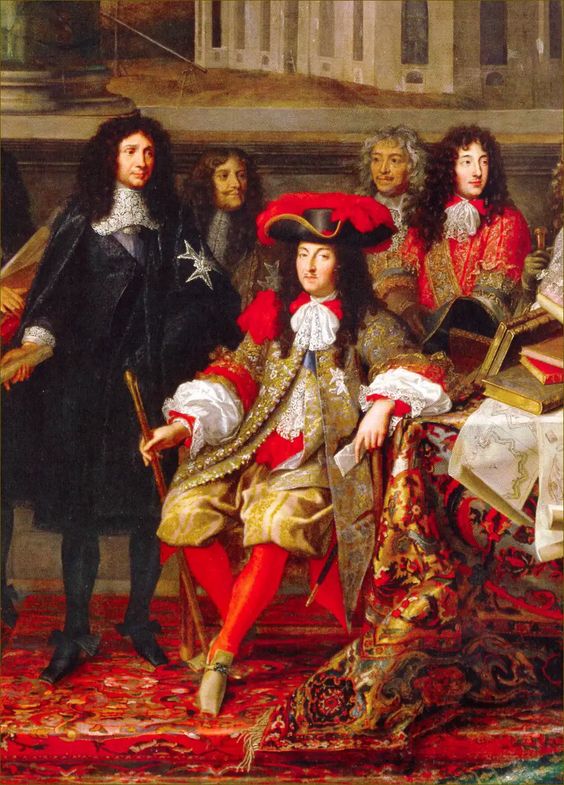
The name “Cravates” comes from 17the century. In the time of Louise XIV there was a Charvat regiment (in French Croates). The soldiers of the regiment worn a fabric around the neck. and from this time the cravat becomes a part of men`s clothing, as a decoration.
I have to mention that Louise XIV had his own “cravat designer”.
Now we can describe cravat as a piece of fabric (made of lace, silk, fine cloth) wrapped around the neck and tied in a knot at front. We know also a word “necktie”. From this word (modern) tie comes from.
(c) Cambridge City Council; Supplied by The Public Catalogue Foundation
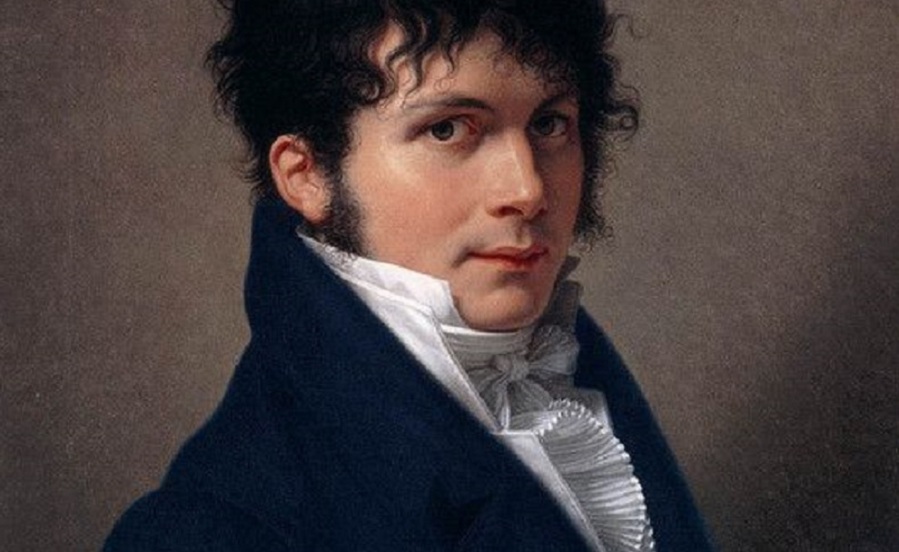
During the Regency era (early 19th century) men worn wide white cloth “scarves”.
Let me mention George Bryan “Beau” Brummell (1778 – 1840) – who was an iconic figure in Regency England and for many years the arbiter of men’s fashion. His name was associated with with good style and look (including nicely folded cravat).
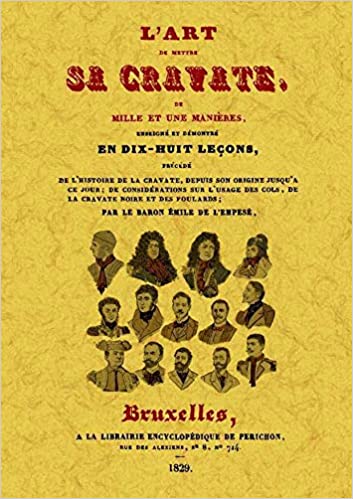
The simpler the men`s fashion was, the more complicated was tying a tie. That`s why, the Biedermeier era brought several books about the art of folding a cravat.
The cravat got a little bit of color in the Victorian era.
Maybe, you may have a question – where a modern type of tie comes from. We may see the modern type of tie on Edouard Manet`s painting “The Balcony” which was exhibited at the Salon of 1869.






 ajournalofhistorian.home.blog