Madam Rose Bertin

Dressmaker to Marie Antoinette

Marie Jeanne Bertin, known as Rose Bertin, lived between 1747 and 1813. She was born in Abbeville, a textile town in the Picardy region of France, which could affected her life purpose. According what she achieved, everybody would say that she came from wealthy and high status family. Unfortunately she did not. She came from family with low income and low society status. So the question is … how did she get so close to Marie Antoinette?…

At her 16 she moved to Paris and she became a scholar of milliner, Mademoiselle Pagelle, with aristocracy clients. Her relationship with Princesses and Duchess brought her closer to Marie-Antoinette. In 1770 she opened her own shop and she again got much closer to French court. Two years later these two ladies were introduced to each other.

She was made “Minister of Fashion” and during service for the Queen she had a significant impact on the fashion and laid the foundations of Parisian haute couture.

What was the design style of madam Bertin? We can have a look on fashion plates. And how to describe this? All the designs are very opulent and ornate. Looking on the fashion plates, I have one question … how long did it take to sew the dress?…

As we know, during this era “poufs” were in fashion. Rose also made several designs.

I love watching historical movies, so, I was looking for movie about the life of Rose and there non so far :-(. However madam Bertin was shown in small role in the movie Farewell, My Queen (original title – Les Adieux à la Reine). I dare say that I like it and I recommend it to you to watch :-))…. (very nice costume design).

As I did not found any movie about Rose, so I was searching for a book about her. And I found something… “Memoires De Mademoiselle Bertin Sur La Reine Marie-Antoinette (1824)” and “Rose Bertin: The Creator of Fashion at the Court of Marie Antoinette“. I think I will add these books to my shopping list :-).

Do you think that there can be fashion more crazy as this one? Because fantasy and creativity do not have limits.

The Complete Costume History by Taschen

The book full of historical dress drawings

There are many books about the historical dress with illustrations and pictures with paintings and you can choose any you like the best. Taschen publishes books about all types of arts. One of the area is fashion. The book “The Costume History” brings over 700 pages of illustrations (colored and black and white). The Mmjor content is about historical dress (of course) from Egypt till Regency era.

Why till Regency era only?

It was written by Auguste Racinet the first edition was published between 1876 and 1888 so do not look for Victorian fashion in this book. Good job Mr. Racinet anyway.

The book contains much more than costumes. It contains also interior illustrations, dishes and other needs of daily life.

We know a lot about the European historical dress. With this book we can get more information about dressing up out side of Europe and other regional national costumes.

There are not just fancy dress. An armor and weapons are part of our history. The warriors and soldiers need to be dressed too. :-))

Even the book is full of illustrations, you may read short notes bringing more details of the pictures and life style.

Will you visit your library or bookstore to read the book?

Hennin

Ridiculous Fashion Series

Dressing up was and still is the form of self-expression and attracting the attention. One of the forms is hat. It can be small, big, wild, tall, colorful, embellished with feathers, …. One type of the headdress is HENNIN

… many of you could think … How it looks like? … so … it is headdress in various shapes and sizes. The most typical form is cone. There are also cone-horn or heart-shaped hennins. I was thinking what was the intention of wearing this type of headdress…..was it replacement for the crown?…

It is not just about the shape, they can also be almost one meter long :-0. And usually, it was decorated with soft veil. Sometimes it was so long that it touched the ground.

It was made of hard paper or starched linen and covered with expensive fabrics such as silk.

The hennin was worn by European women in late Medieval age. The first lady who wore the hennin was Isabeau of Bavaria (the lady on the left) at the Burgundy court about a year 1395 and it was worn during a century.

Would you like to wear a cone shaped hat?

Yna.cz

Reconstructing historical costumes based on fine arts.

Web page YNA.CZ was founded by Kristýna Petříčková to present her work. Kristýna studied artistic industry and fine art. She taught at School of Art and at the University in Zlín. Currently, she is a Head of clothing design studio at the University in Zlín, Czech republic.

Her work is stunning with beautiful details. She reconstruct mostly historical dress from Medieval age and Renaissance.

Besides reconstructing historical dress, she is also interested in Czech national costumes.

A part of her scientific work is also organizing the exhibitions of reconstructed dress through out the centuries.

I feel I am going to start creating something really nice. Will you do it too with me?

Braveheart

William Wallace – Scottish Hero in a Kilt?

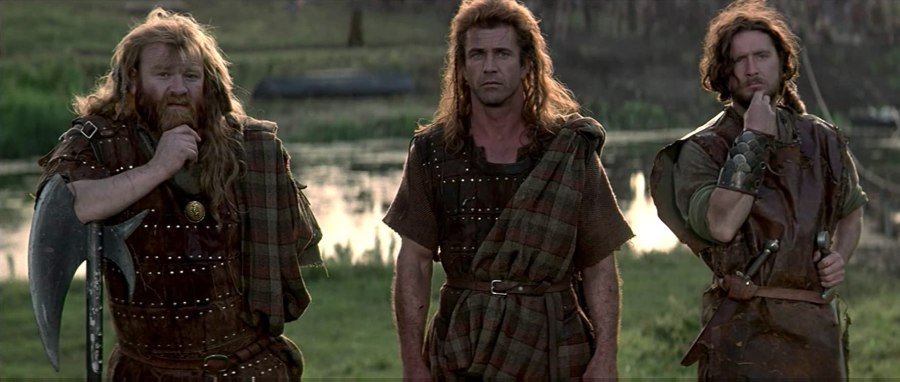
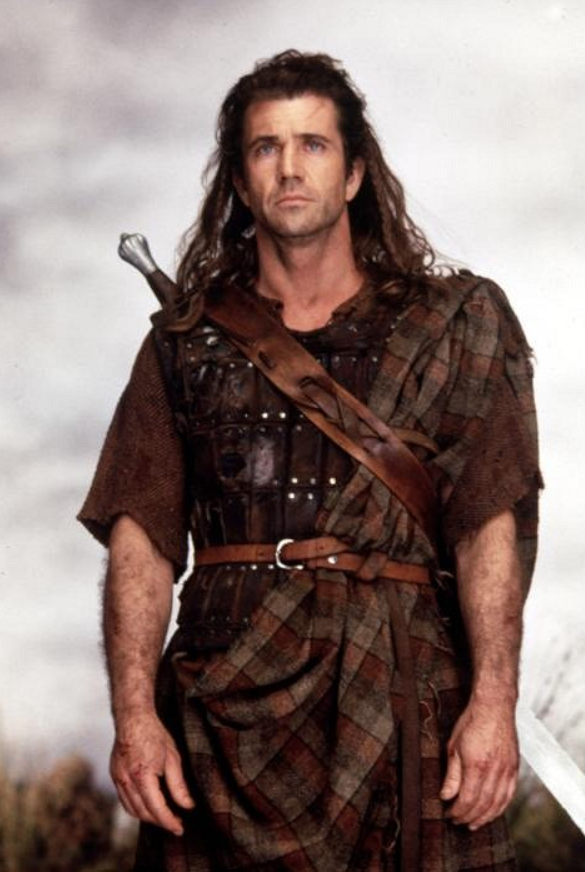
The movie Braveheart was directed by Mel Gibson, who was also staring as William Wallace. The movie itself is good however there are couple of things historically incorrect.

First of them is a kilt. There is not evidence of wearing belted plaid in 13th century. The first notice was in the late 16th century. And it was not fully developed until the late 17th century. Using the kilt in the movie about William Wallace is not historically accurate.

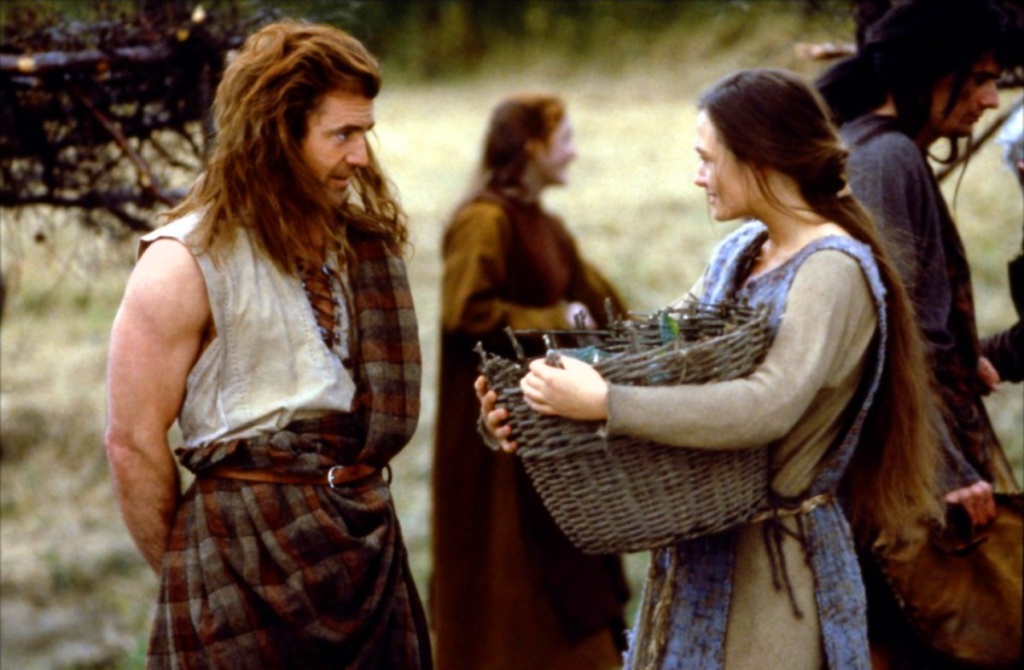
My other notice about the William`s costume is sleeveless shirt (or tunic). According to the evidence, there were long sleeves garments, shirts and tunics. And in some cases there were short sleeves – no sleeveless shirts. Probably, the intention was to show Mel`s arms ;-)).

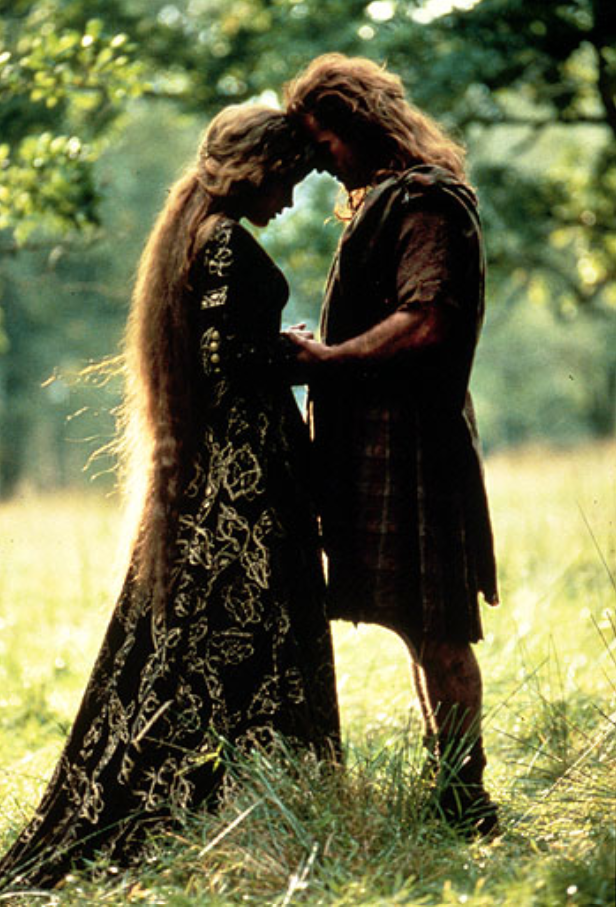
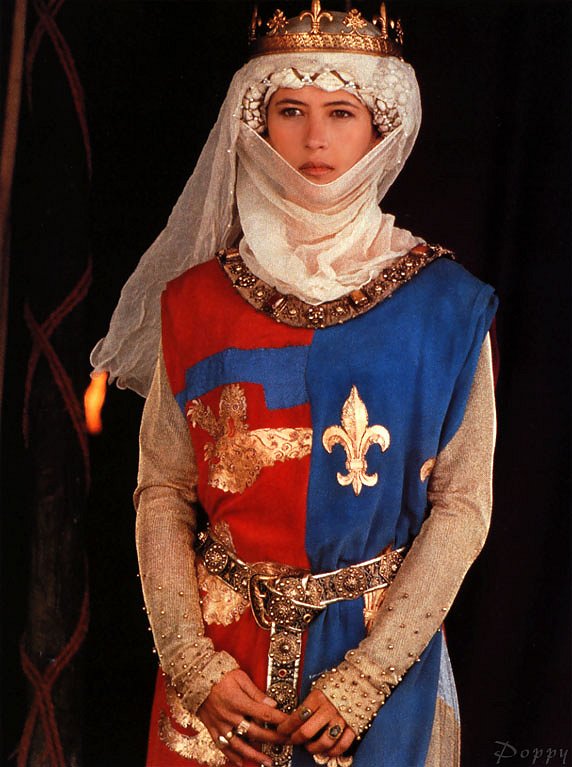
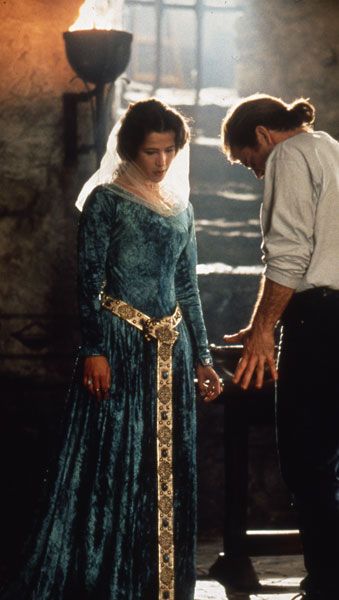
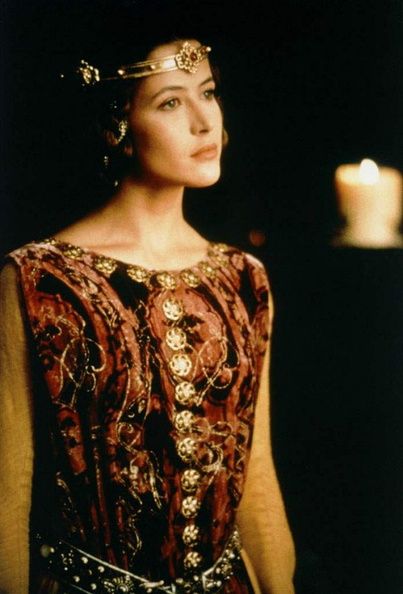
The second thing I am concerned about is the relationship between William Wallace and Princess Isabelle. William Wallace was born in 1270 and died in 1305. Princess Isabelle lived between 1295 and 1358. There is difference of 15 years (not so big deal). However, William died in his 35 and Isabelle was not 10. I do not think the relationship would be possible. The movie shows them as two people of the same age.

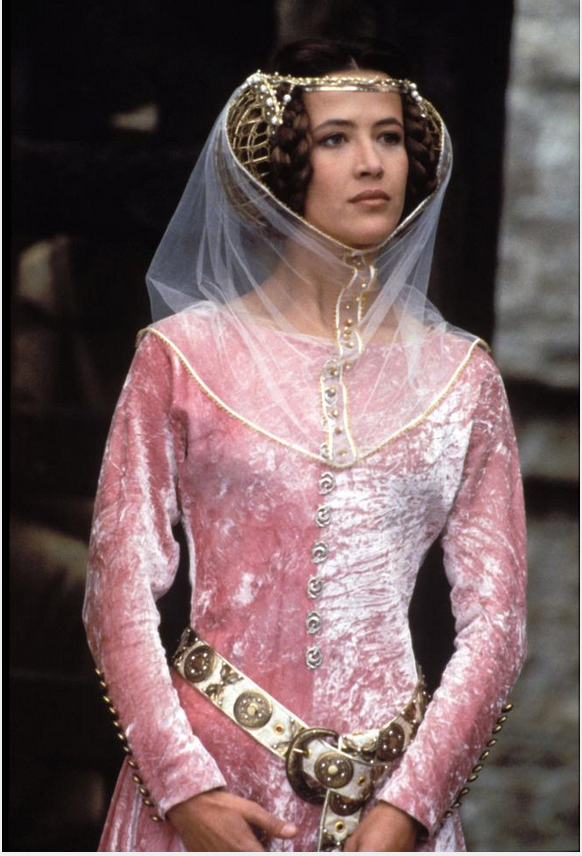
Let`s have a closer look at Princess Isabelle dress.

A heraldry was mostly used on armor however it was used also on ladies dress or surcotes. In common, it was done as mi-parti – a dress divided into left and right parts of different colors.

Another type of clothing in 13th century are cotte and surcote.

A cotte, a kirtle or a cotehardie is a quite long dress with smooth sleeves, shaped arm hole, the bodice is tight, the skirt is wide and extended.

… and … headdress is beautiful…

Do you know any movie with historically incorrect costume design?

Wigs with Ships in Rococo

Ridiculous fashion series

As we know the fashion of Marie Antoinette was ornate, decorative and absurd too. This period also brought remarkable hairstyle. Normally I would say that the wigs were decorated with flowers and ribbons. However the wig decoration went further. For example … bird cages and ships were used.

The wig has been already known in Egypt, Persia or Assyria. The greatest popularity has achieved in 17th century during the reign of Louis XIV.

The wigs were powdered to get white color. However, there were not just the white wigs. Favorite colors were also pink and blue-ish grey.

Do you know why the ships were used to decorate the wigs? … If not, I will tell you … A French frigate won over an British one in 1778 and this hairstyle commemorated the victory. This hairstyle was named “À la Belle Poule” after the winning ship Belle Poule.

The battle as painted by August-Louis de Rossel de Cercy. Belle Poule is on the right.

Nowadays, there are many designers inspired by history. Their creations are also stunning.

… a paper is also good material to make a wig :-)) … The fantasy is not bounded.

Would you put a ship on your head? Or do you prefer to sail on it?

Fabrics – Medieval Age

Sewing between 12th and 15th century.

Each era has specific types of cloth. It depends on social situation, economics and politics, purpose and also material availability. The nobles could afford to buy expensive cloths such a brocade, silk or velvet. The peasants wore practical clothing from linen and wool.

Brocade is heavy silk cloth, richly patterned, interwoven with gold and silver threads. It was user for court and ecclesiastical clothing.

Velvet was made from silk or linen. It is most possible that is came to Europe from far east via the Silk Road. Very famous production of velvet was done Italy – Lucca, Genoa, Florence. Later the production started also in Spain and France.

Silk – the thread was obtained from silkworm. It is light, shinny and swoosh :-)). The highest quality had silk from Italy.

Fur was used for dress lining and decorating a hem. Mostly used furs were from ram, fox or marten.

Linen is most common cloth used. I was not used just for clothing (under and outer garments) but also for bedding and lining.

Wool thread was made of sheep and goats hair. It was used mostly for outer garments such as capes, hoods and also stockings to keep warm during cold weather

Leather was used thousands years before. In Medieval are it was used for shoes and boots (many times colored), gloves, belts and purses.

Which fabric do you like most?

The Metropolitan Museum of Art

Visit a museum online

The MET” in New York City is the largest art museum in USA. Its permanent collection contains over two million works such as classical antiquity and ancient Egypt, paintings, and sculptures, musical instruments, costumes and accessories, weapons and armors, also interiors from all over the world. The Met maintains extensive holdings of African, Asian, Oceania, Byzantine, and Islamic art, too.

It was founded in 1870 and this year it celebrates 150 years. Happy Anniversary!!! :-))

The MET holdings are under the roof of this beautiful building with glamorous interior.

A Day at the Met

Today we will visit Costume Institute, obviously :-). It was founded in 1946. Today, its collection contains more than 35,000 costumes and accessories :-0.

Many of us do not have opportunity to travel to NY and thanks to the internet we may to fulfill our dream. The collections are in digital form and you may browse them online.

I searched a gown “Robe à la Française” and I found this one from 1740 made of floral fabric. All the dress are photographed from various angles, also you may have a look on details.

Each of the documented garment is described and get more detailed information. Even the photos are nicely done, the description gives you more unseen features.

The photos are not enough for you? Hmm… Here is the YouTube link to fashion department videos.

Let`s dive in to more search.

Kostym.cz

High quality of historical costumes and patterns

Kostym.cz is the one of the most complex web site focusing on historical dress. The content is very wide. This page is not just about the European garments from Medieval age or Renaissance. It also includes information about far east, jew or gypsies clothing. You can read theoretical studies about the historical tailoring and pattern making advises based on historically accurate evidence, too.

Let me say that the web site has non-standard format. It is like flipping through a book or clicking on icons in OS Windows :-)):

This web site was founded by a married couple Martina and Martin Hřibs. I named them “The Scientists in the Field of Clothing”. They look very nice, do not you think?

Martina and Martin are very skilled in reconstructing historical garments through the centuries. They work is based on research of historical sewing techniques. And I can assure you that do everything to bring you historically accurate pattern and sewing techniques.

Martina and Martin organize a seminar “Clothing in history” every autumn in Zlín, Czech Republic. They invite the experts to present their studies. There is also printed outcome from this sessions including whole content presentations. Unfortunately, the presentations are in Czech language only.

As you see, M&M provide us valuable information. To spread your knowledge and get most recent updates, you can follow Facebook page. The web site and the Facebook page are originally set with Check language, but there is no need to be worry. All the posts are available also in English language :-).

Martina and Martin also unite another historical dress lovers and specialists. For example Hanka. She has 200 entries of sewing projects from Medieval age to Regency era.

Martina and Martin are very inspiring, do not you think?

Robin Hood

A myth or one man created from various thieves?

Ridley Scott directed in 2010 another version of medieval hero Robin Hood, staring Cate Blanchett as Marion and Russell Crowe as Robin.

As the story of Robin Hood is mystified and romanticized, I will not focus on storytelling, but the costume design.

In my opinion to make costume for any of Robin Hood movies is not easy. Nowadays we see Robin Hood in the era of Richard I. The Lion King who lived in 12th century. There are various mentions about “Robin Hood” from 13th until 17th century. So we really do not know where the story came from. For now we will let Robin Hood be a man from Medieval age in general :-).

All the credits for costume design go to Janty Yates. She has 33 credits for movies and TV-series so far … not bad 🙂 …

First of all I would like to point out using beautiful brocades and stunning embroidery for royalty costumes.

Eleanor of Aquitaine is wearing surcote with animal embroidery. The surcote is typical piece of women`s wardrobe in Medieval age, it is sleeveless dress with deep arm holes. The hair and the neck are fully covered with a veil made of delicate linen or cotton.

Marion (most of the time seen as peasant) wears linen long sleeve cotehardie tied up with twine in front and white linen chemise underneath.

… and how to comment this … Marion wears something what looks like a corset… :-0 So far we know that the wearing of corset starts in Renaissance era. Whatever the intention was, the corset is not historically accurate for Medieval age.

And finally … Robin … a hero with a hood…

Overall, for me, it is pleasure to watch the movie and admire the costumes.

How it would be not to finish the story with Marion and Robin romance scenes …